Article, Resource
filed under
Energy
| Written by
John Farrell
|
| Updated on
Jan 15, 2013
The content that follows was originally published on the Institute for Local Self-Reliance website at http://www.ilsr.org/clean-contract-feed-in-tariff-101/
A 5-minute video explaining CLEAN Contracts (a.k.a. feed-in tariffs) in simple terms. It’d be great if it used a name for the policy that’s in common circulation, but since I was guilty of using Renewable Energy Payments, too, I shouldn’t complain. How Renewable Energy Payments (REPs) Work. from Chris Neidl on Vimeo. Continue reading
Article, Rule
filed under
Energy
| Written by
John Farrell
|
| Updated on
Aug 22, 2012
The content that follows was originally published on the Institute for Local Self-Reliance website at http://www.ilsr.org/rule/clean-programs-feed-in-tariffs/
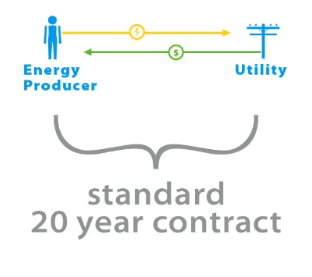
Few policies make renewable energy production easier than CLEAN (Clean Local Energy Accessible Now) Programs, also known as feed-in tariffs. The basic premise is to require utilities to buy renewable energy from individuals or businesses on long-term, fixed price contracts at prices sufficient to encourage them to invest. The most robust policies span multiple technologies… Continue reading
Article
filed under
Energy
| Written by
John Farrell
|
| Updated on
Aug 15, 2011
The content that follows was originally published on the Institute for Local Self-Reliance website at http://www.ilsr.org/new-small-hydro-could-add-significantly-state-renewable-power/
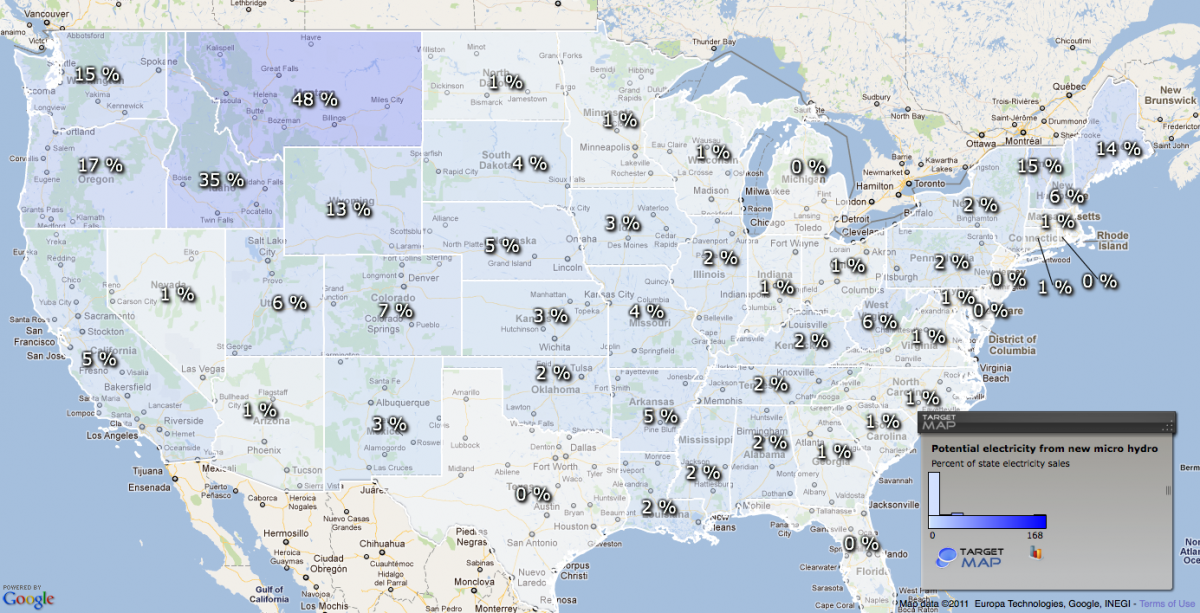
Over at Climate Progress, Stephen Lacey recently asked why there isn’t more development of micro hydro in the U.S., given its potential to provide more than 30,000 low-cost megawatts of power to U.S. states (and bipartisan political support).
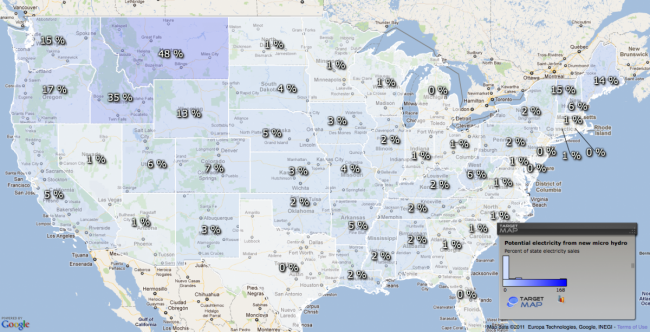
We can’t answer that question any better than Stephen, but we can provide a good illustration of that potential, replicating a map from our 2010 report Energy Self-Reliant States (click here for a larger version):
New Micro Hydro Power Potential (Percent of State Electricity Sales)
Continue reading
Article
filed under
Energy
| Written by
John Farrell
|
| Updated on
Oct 19, 2010
The content that follows was originally published on the Institute for Local Self-Reliance website at http://www.ilsr.org/pumped-hydro-storage-still-cheaper-batteries/
A nice, short comparison of the cost of electricity storage with pumped hydropower and batteries.
Using pumped hydro to store electricity costs less than $100 per kilowatt-hour and is highly efficient, Chu told his energy advisory board during a recent meeting. By contrast, he said, using sodium ion flow batteries — another option for storing large amounts of power — would cost $400 per kWh and have less than 1 percent of pumped hydro’s capacity.
Of course, you need to have a river with a likely reservoir location to have any significant quantity of pumped storage, making the article’s reference to Texas a bit ironic.
For those unfamiliar with the concept, here’s a nice diagram of pumped storage from Consumers Energy:

Continue reading